


Laser hair removal is a common beauty procedure that is usually performed without any issues. However, there are cases where things go wrong, with potentially devastating injuries suffered by those affected. If that’s something you have experience of, you may be entitled to compensation. Our laser hair removal claims guide will explain why and show you how to get started.
You’ll first learn about the eligibility criteria for starting a claim, together with the responsibilities that places like spas have to their clients. We will also explain how compensation can be calculated and whether it’s possible to claim for financial losses.
As our guide continues, we will explore common injuries and some examples of negligent laser hair removal procedures. Finally, we’ll highlight some of the many benefits of working with one of the specialist personal injury solicitors making up our solicitors.
Contact Us
If you have any questions about the process of claiming or want to get a free eligibility check, please reach out to our advisors by:
- Calling us on 0800 073 8803
- Contacting us online
- Using our live chat
Frequently Asked Questions
- Who Is Eligible To Make Laser Hair Removal Claims?
- What Compensation Payouts Can Be Awarded For Negligent Laser Hair Removal?
- Examples Of How Laser Hair Removal Can Go Wrong
- The Common Injuries Caused By Laser Hair Removal Negligence
- What Should I Do If My Laser Hair Removal Goes Wrong?
- Can I Make A No Win No Fee Claim?
- Learn More
Who Is Eligible To Make Laser Hair Removal Claims?
Anyone can be eligible to make laser hair removal claims so long as they can prove:
- Someone owed them a duty of care
- That duty was breached in some way
- The breach directly led to injuries being sustained
A duty of care is the responsibility that another party has to protect your well-being and safety. In the context of laser hair removal, that duty of care is outlined in the Occupiers’ Liability Act 1957, which states that those who control public spaces must take practical measures to ensure visitors like you are kept reasonably safe.
As traders, laser hair removal practitioners are also expected to show reasonable skill and care when providing their services, per Part 1 of the Consumer Rights Act 2015. Some practitioners may also have to register with the Care Quality Commission (CQC) depending on the type of laser treatment they use. The CQC is England’s independent regulator for health care providers.
In laser hair removal claims, practitioners can fulfil their duty of care by taking steps such as:
- Ensuring you are informed about the procedure you are about to receive
- Using sterilised and clean equipment
- Providing patch tests
- Telling you about what you should expect after the treatment
- Giving you sufficient information about treatments and aftercare
Later on in this guide, we’ll take a look at several scenarios that may give rise to a personal injury claim. You can also speak with our advisors to get a free, no-obligation eligibility check.
What Compensation Payouts Can Be Awarded For Negligent Laser Hair Removal?
General and special damages can be awarded as compensation payouts for negligent laser hair removal. The starting point of any successful claim is general damages, which compensate individuals for the pain and suffering of their injuries. Special damages can be awarded to help recover the costs resulting from those injuries.
When solicitors calculate the potential value of general damages, they may take a look at the Judicial College Guidelines (JCG). This document outlines a variety of suggested compensation brackets for different injury types and severities.
Our table below has a selection of these brackets, but please note that, since they are only suggestive, they do not guarantee any compensation. The first entry was also not taken from the JCG, but all subsequent rows are.
| Injury | Severity | Compensation |
|---|---|---|
| Multiple Severe Injuries + Special Damages (Such As Loss of Earnings) | Very Severe | Up to £1,000,000+ |
| Psychiatric Damage | Severe | £66,920 to £141,240 |
| Moderately Severe | £23,270 to £66,920 | |
| Moderate | £7,150 to £23,270 | |
| Bodily Scarring | Burns Covering 40% or More of the Body | Likely to Exceed £127,930 |
| A Number of Noticeable Laceration Scars or Single Disfiguring Scar | £9,560 to £27,740 | |
| Facial Disfigurement | Very Severe Scarring | £36,340 to £118,790 |
| Less Severe Scarring | £21,920 to £59,090 | |
| Significant Scarring | £11,120 to £36,720 | |
| Less Significant Scarring | £4,820 to £16,770 |
What Factors Will Determine The Final Payout Amount?
A number of factors can determine the final payout amount for successful laser hair removal. As we discussed above, general damages are compensation for your injuries, but they can also cover something called a loss of amenity. This term factors in how your quality of life and ability to perform day-to-day tasks have been negatively impacted by your injuries.
Special damages can compensate you for any financial loss that was provably caused by your injuries. You will need evidence to support your claim, such as:
- Payslips to demonstrate a loss of earnings or earning potential
- Bus fares or train tickets showing the cost of travelling to medical appointments
- Invoices for building work to adapt your home to accommodate accessibility improvements like a stairlift. You could also claim for any modifications made to your vehicle
- Bank statements or receipts showing medical expenses like private treatments, occupational therapy, counselling, and prescriptions. This documentation could also be used to prove purchases of specialist equipment or clothing, such as wheelchairs and gloves
As part of the services on offer, a specialist solicitor from our panel can help collect this evidence to support your claim for special damages. If you have any questions about their work or compensation in general, please contact our friendly advisory team today.
Examples Of How Laser Hair Removal Can Go Wrong
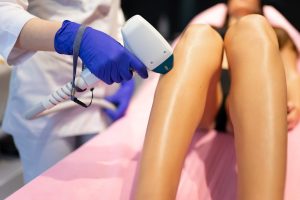
Below, we will discuss some examples of how laser hair removal can go wrong and show how it might result in a compensation claim.
Failure To Perform A Patch Test
Patch tests are designed to determine if there might be any adverse reaction during your laser hair removal appointment. These tests can also help your practitioner calibrate laser settings for your specific skin and hair type.
- At your consultation, your practitioner makes no mention of patch tests and doesn’t offer one. When you later get the treatment, you experience a serious reaction that leaves you with noticeable scarring, discolouration, and resulting depression.
Incorrect Laser Settings Or Timings
If your beautician fails to adjust laser settings to ensure they are suitable for your skin type, it may cause irreversible damage, such as burns. Likewise, practitioners must also make sure that laser machines are not used for too long.
- While getting a treatment at a salon, you suffer extensive scarring when your practitioner uses the wrong wavelength for your skin type, and for too long. This damage leaves you with low self-esteem and causes you to develop long-term depression.
Lack Of Proper Training
While accreditations or certificates are not always required, the person providing you with laser hair treatment should at least have sufficient training.
- A spa fails to provide staff with adequate training on how to use a new laser machine. Subsequently, you suffer extensive burn injuries when a staff member leaves the machine on for too long.
Unsterile Environment And/Or Equipment
Beauty procedures like laser hair removal can sometimes pose a risk of infection, especially if the environment or equipment has not been properly sterilised.
- Staff at a salon neglect to sterilise devices while rushing to accommodate several clients. As a result, you acquire a serious infection that quickly turns into life-threatening sepsis, leaving you with kidney damage.
These are only a few examples and not an exhaustive list. If you would like to share your particular circumstances, our advisors are here to listen and help. They can also provide you with a case assessment completely free of charge to see if you have a valid claim.
The Common Injuries Caused By Laser Hair Removal Negligence
Some of the most common injuries caused by laser hair removal negligence include:
- Burn injuries
- Skin irritation or dermatitis
- Persistent pain
- Hair damage
- Blistering
- Scarring
No matter what kind of injuries you sustained due to negligent laser hair removal, our team of advisors are here to listen and provide guidance tailored to your specific circumstances.

What Should I Do If My Laser Hair Removal Goes Wrong?
The first thing you should do if your laser hair removal goes wrong is to seek medical assistance. Even if you’re unsure about the severity of your injuries, a medical professional can ensure you get the appropriate care. This step can also create an official record of your injuries and the treatment that you needed (or need), which can be used as evidence for your claim.
Evidence is important in all laser hair removal claims since it can demonstrate how your injuries were caused by someone breaching their duty of care. For instance, you can use:
- Medical or GP records showing the extent and severity of your injuries
- A diagnosis confirming a psychological condition like depression that was caused by negligent laser hair removal
- Photographs of the injuries, such as scarring or blistering. Before-and-after pictures can be an effective way to illustrate the damage
- A diary of your symptoms and pain, as well as how your day-to-day activities and quality of life have been affected
As mentioned earlier, you can get help with this vital task if you decide to work with a solicitor from our panel. They’re experts at building strong cases and know just what kinds of evidence can support a claim.
Is There A Time Limit For Laser Hair Removal Claims?
Yes, there is a 3-year time limit for starting laser hair removal claims. This time limit is typically dated to when the incident happened and is established by the Limitation Act 1980. However, the act pauses the time limit for minors and adults who are mentally incapacitated since neither can make a claim on their own:
- Children will only face a time limit from the day of their 18th birthday. So, they’ll have 3 years in which to file a claim, up to their 21st birthday
- The standard 3 years will only take effect for mentally incapacitated adults if they make a recovery. In such cases, the time limit will apply from when that mental capacity returned
However, eligible adults like loved ones and solicitors can help someone from these groups claim while time limits are suspended. To do so, they would need to take on the role of a litigation friend and perform various duties in the claimant’s best interests.
To learn more about whether your claim still falls within the time limit or about what evidence would be helpful in your claim, please speak with one of our advisors today.
Can I Make A No Win No Fee Claim?
Yes, you can make a No Win No Fee claim with one of the solicitors making up our panel. They work under a Conditional Fee Agreement, which means you wouldn’t have to pay any solicitor fees for their services upfront or during the claims process. You also won’t face solicitor fees if the claim loses.
If your claim wins, a small success fee would be taken from your compensation as payment for the solicitor’s work. Since the percentage taken is capped, you’ll have peace of mind from the start that you get the bulk of compensation.
Our panel of solicitors have worked tirelessly for clients across the country, ensuring they navigate the claims process without ever feeling unsupported. They understand that every client has unique needs, and they tailor their services accordingly. Here’s how a solicitor from our panel could help you:
- Explaining unfamiliar terms and documentation to make the claims process as accessible as possible for you
- Handling all aspects of your claim so you can stay focused on your recovery
- Gathering evidence to build a strong and compelling case
- Supporting your rehabilitation by putting you in touch with specialists like psychologists
- Ensuring your claim is started within the correct time limit
Contact Public Interest Lawyers
If you’re ready to get started or would like more information about the process of making laser hair removal claims, please get in touch with one of our advisors today. Our advice services are available throughout the week by using the contact details below:
- Call us on 0800 073 8803
- Contact us online
- Use our live chat

Learn More
For further information, you can read our guides on:
- How to claim for a shoulder injury
- Claiming if you have fallen down the stairs at work
- Starting a claim after being stuck in a lift
Useful external resources:
- Government overview of claiming Statutory Sick Pay
- NHS guidance on contact dermatitis
- Advice from the NHS on chemical burns
Thank you for taking a moment to read our guide on laser hair removal claims.