


The average burn injury compensation amount may vary between £36,340 to £118,790 for very severe facial disfigurement, through to an award in excess of £127,930 for burns affecting more than 40% of the body (according to figures within the Judicial College Guidelines). How much compensation you could be awarded can vary depending on the type and severity of burn injuries sustained, how they have impacted your life, and whether you also suffered any financial losses.
A specialist solicitor from our panel with experience in personal injury claims for burns could help you seek compensation. They understand how stressful the claiming process can be, and will guide you through every step. They can also offer their expert services to you on a No Win No Fee basis. Contact our advisors today to learn more about working with a solicitor from our panel and receive free advice for your case.
Jump To A Section
- Average Burn Injury Compensation Amounts
- Can Compensation For Burn Injuries Cover Special Damages?
- Am I Able To Claim For Burn Injury Compensation?
- How Might A Burn Injury Be Sustained?
- What Are The Different Degrees Of A Burn?
- The Potential Complications After Suffering From A Burn
- What Will I Need To Bring A Burn Injury Claim?
- Is There A Burn Injury Compensation Claim Time Limit?
- Why Choose Our Panel Of Solicitors to Claim Burn Compensation
- Learn More
Average Burn Injury Compensation Amounts
The average burn injury compensation amount may range from £4,820 to £16,770 for less significant facial scarring, to over £127,930 where over 40% of the body is covered in burns and there is also a psychological impact. This is according to figures published in the Judicial College Guidelines (JCG), a document which legal professionals may consult when calculating compensation, as it contains compensation guidelines for a range of injuries.
How much compensation you may be awarded would depend on the severity of your burn injury, the psychological impact this had on you, and how the injuries have impacted your daily life.
The table below lists figures from the JCG that may be applicable to burn injury claims. Please note that they are only intended as a guide and that the top entry has not come from the JCG.
| Injury | Severity | Compensation |
|---|---|---|
| Multiple burn injuries and special damages | Severe and serious burn injuries with financial losses such as for medical treatment, care, and lost earnings. | Up to £500,000+ |
| Scarring to the body. | Serious burn injuries covering more than 40% of the body. | Likely to exceed £127,930 |
| A number of scars which are noticeable or a disfiguring one. | £9,560 to £27,740 | |
| A noticeable scar or several scars which are superficial. | £2,890 to £9,560 | |
| Facial disfigurement. | Very severe scarring - In a relatively young person (teens to 30’s) | £36,340 to £118,790 |
| Less severe scarring - Disfigurement is still substantial. | £21,920 to £59,090 | |
| Significant scarring - Where plastic surgery can reduce the effects. | £11,120 to £36,720 | |
| Less significant scarring - Where there was one scar or a number of smaller ones. | £4,820 to £16,770 | |
| Psychiatric damage | Moderately severe - Significant issues with daily working and social life. | £23,270 to £66,920 |
| Moderate - Various problems but a marked improvement has been made. | £7,150 to £23,720 |
Contact our advisors today with any questions you may have about how compensation is calculated.
Can Compensation For Burn Injuries Cover Special Damages?
Yes, compensation for burn injuries can also cover special damages for any financial losses the injuries have caused you. Severe burn injuries could have a significant impact on you financially, in addition to the effects on your health. Special damages may compensate for:
- Care costs, including any short-, medium-, or long-term care and support required. This may include childcare or other domestic support.
- Medical treatment costs, such as skin graft surgeries and prescription fees.
- Loss of earnings, including wages, overtime entitlement, pension contributions and other income.
- Travel expenses to access medical or legal support.
- Therapy fees to help with any psychological impacts of the burn injuries.
A specialist burn injury claim solicitor could help you collect supporting evidence, such as bank statements or invoices, to prove these losses. Please contact us for help and support.

Am I Able To Claim For Burn Injury Compensation?
Yes, you could be able to claim for burn injury compensation if it can be proven that your injuries were caused by the negligent actions of a third party. Essentially, your case will need to demonstrate the following:
1. Someone Owed You A Duty Of Care
Someone else, such as a business, organisation, or person, must have had a legal responsibility (duty of care) towards you. Per this, they were responsible for taking reasonable steps to protect your health and safety at the time of your accident and burn injury.
2. The Duty Of Care Was Breached
This party failed to act as a reasonable organisation or a person would have, such as by ignoring health and safety legislation, failing to maintain facilities, or making other avoidable mistakes. You need to provide evidence of this breach.
3. The Breach Caused Your Burns
You must also show that the breach identified above caused you to suffer burn injuries, as well as any psychological harm and financial losses.
One of the solicitors on our panel could help you to make a burn injury compensation claim. Please get in touch today for a free eligibility case check.
How Might A Burn Injury Be Sustained?
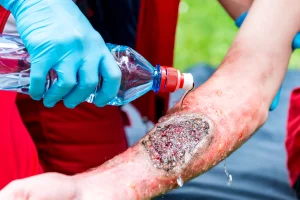
Burn injuries may be sustained through damage caused by exposure to heat (thermal burns), chemical substances, acids and other chemicals, as well as electricity. In the following sections we look at the circumstances in which these different types of burn injuries may be sustained.
Workplace Accident
Accidents at work could occur when employers fail to meet their duty of care, as set out in legislation such as the Health and Safety at Work etc. Act 1974. This requires them to take reasonable steps to ensure their employees’ safety. Workplace accidents could occur where:
- Thermal burns could be caused by contact with overheating machinery which has not been properly maintained and serviced by an employer.
- Chemical burns can occur from coming into contact with hazardous substances during the course of your duties due to not being issued the required personal protective equipment.
Road Traffic Accident
Road traffic accidents could be caused by road users’ failure to adhere to their duty of care in using the roads safely, or by breaching road safety laws such as the Highway Code or the Road Traffic Act 1988. Traffic accidents could occur where:
- A drunk driver collides into the back of another vehicle, causing the driver who was hit to suffer burn injuries to their chest and face from the airbag deployment.
- A driver fails to pay due care when merging from the slip road onto the motorway. They collide at high-speed with a motorcyclist, knocking them off their bike and suffering friction burns.
Public Place Accident
The party in control of any public space is responsible for the reasonable safety of those using said space. This party is known as the occupier and owes their duty of care under the Occupiers’ Liability Act 1957. Burns could be caused by:
- A cafe serving a scalding hot drink, which causes thermal burns to the customer’s hands and mouth.
- A faulty treadmill with exposed wires in a gym that was not signposted to warn members not use it causes a user to suffer an electrical burn when they try to use the machine.
Medical Negligence
Medical negligence could cause burn injuries through surgical errors, poor use of or faulty equipment, or poor aftercare. All medical professionals have a duty of care to provide the minimum standard of care. If they fail to do so, unnecessary harm could be suffered. Examples include:
- Chemical burns can occur from improper application of medical products, such as antiseptics.
- Radiation burns could be caused by the inappropriate or overuse of radiotherapy during cancer treatment.
Criminal Injuries
Burns can be caused by assaults and other violent crimes. These may include:
- An assailant throws acid over a victim during an assault, causing severe chemical burns.
- Burn injuries suffered during assaults and similar attacks, such as cigarette burns, etc.
If you have been injured in a crime of violence, you could claim through the Criminal Injuries Compensation Authority (CICA). This is a government-funded executive body which administers the Criminal Injuries Compensation Scheme 2012 (CICA Scheme). To learn if you could claim through the CICA, you can read our dedicated criminal injuries claims guide.
How Much Burn Injury Compensation Can I Get From The CICA?
The CICA Scheme sets out a tariff of injuries that the CICA uses to value claims. These are fixed amounts, meaning you would receive the exact figure listed for your injury. Below, we have listed some of these tariff amounts relating to burn injuries. Please note, however, that the top entry is the maximum amount the CICA will pay for any claim.
| Type Of Injury | Severity | Tariff |
|---|---|---|
| Multiple criminal injuries, plus special expenses and lost income. | Severe with special expenses for damaged physical aides, home modifications and mobility aids, for example. | Up to £500,000. |
| Burns affecting multiple areas of the body (more than 25% of the skin). | With significant scarring. | £33,000.00 |
| Head and neck burns | Face - causing more than minor disfigurement. | £27,000.00 |
| Neck - causing greater than minor disfigurement. | £16,500 | |
| Upper limb burns. | Severe burns. | £11,000 |
| Moderate (excluding) minor burns. | £2,400 | |
| Torso burns. | Severe burns. | £11,000 |
| Moderate (not minor) burns. | £2,400 | |
| Lower limb burns. | Severe burns. | £11,000 |
| Moderate (not minor) burns. | £2,400 |
If you would like to know whether you could be eligible to claim burn injury compensation, you can contact our advisors.
What Are The Different Degrees Of A Burn?
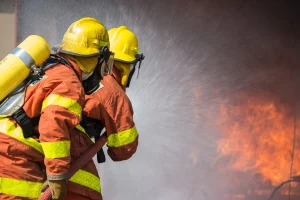
There are 4 different degrees of burn injuries, ranging from superficial, through to partial thickness and full thickness burns. These may be thermal, acid, chemical burns or electrical burns. According to the NHS, the different degrees of burns and scalds include:
- First-degree burns/ superficial epidermal burns – this is where the outer layer of the skin, called the epidermis, is damaged. Symptoms include pain, redness, and slight swelling.
- Second-degree burns/ superficial dermal burns – this is where the epidermis and the layer below (the dermis) are both damaged. Symptoms include pinkness, pain, and small blisters.
- Third degree burns/ partial thickness or deep dermal burns – both the epidermis and dermis are injured. Symptoms include skin turning red and blotchy, blisters, swelling, and may be dry or moist. The injury may or may not be painful.
- Fourth degree burns/ full thickness burns – the epidermis, dermis, and subcutis (the deep layer of tissue) are all damaged. Skin may be fully burnt away, with exposed tissue appearing blackened or pale. The remaining skin may be dry and black, brown, or white, and there may be no blisters. Skin may feel waxy or leathery and could be painless.
According to the same NHS resource, the following injuries require A&E treatment:
- Burns larger than the person’s hand.
- Burns (of any size) causing charred or white skin.
- Electrical and chemical burns.
- Burns to the hands, feet, face, neck, genitals, or joints.
If you have suffered a burn injury, you can contact our advisors to see whether you may be eligible for compensation.
The Potential Complications After Suffering From A Burn
The potential complications after suffering a burn injury can range from immediate shock and heat exhaustion to potentially serious infections. Complications could include:
- Shock – following a serious injury, such as a burn, people may go into shock. This is a life-threatening condition in which the person gets an insufficient amount of oxygen. Symptoms could include a pale face, a rapid pulse, fast, shallow breathing, and unconsciousness.
- Heatstroke and heat exhaustion – these are related serious conditions which can happen when your body temperature exceeds 37-40 °C. Symptoms can include dizziness and fainting, a rapid pulse, extreme tiredness, and confusion.
- Infection – blisters and burn wounds could become infected if not properly cared for. Symptoms of infection could include pain, a smell, or a high temperature.
- Scarring – burns may leave a patch of tissue once a wound has healed. The less severe a burn, the less scarring there may be. Severe injuries may result in permanent scarring.
- Psychological harm – severe burns could cause stress, anxiety, and depression.
Burn injury compensation claims could take these complications into account when valuing your case. Please contact us today to learn more.
What Will I Need To Bring A Burn Injury Claim?
To bring a burn injury claim, you will need to collect evidence showing who was responsible for your accident and the injuries you sustained. You can collect:
- Medical records showing how you were harmed, what treatment you required, and your prognosis.
- Photographs of visible burn injuries, such as scarring.
- Accident reports record details of your accident.
- Police reports.
- The contact details of any witnesses to your accident.
- Video footage of the accident, such as CCTV.
- The contact information, insurance details and vehicle registration if involved in an accident with a motorist
A solicitor from our panel could help you with gathering supporting evidence. Contact our advisors to learn more.
Is There A Burn Injury Compensation Claim Time Limit?
Yes, there is a 3-year time limit for burn injury compensation claims. This runs from the date your accident took place and is set out within the Limitation Act 1980.
To learn more about this time limit and the exceptions that apply, you can read our dedicated limitation period guide.
To see if you still have enough time to begin your claim for burn injury compensation, you can contact our advisors.
Why Choose Our Panel Of Solicitors to Claim Burn Compensation
You should choose our solicitors to claim burn injury compensation as they have years of experience working on these types of claims and would be dedicated to helping you secure the best outcome. Some of the excellent services they could provide you with include:
- Providing a clear explanation of the claims process.
- Organising for you to have an independent medical assessment.
- Assisting in the collection of evidence.
- Filing your claim within the time limit.
- Helping you access medical, psychological, and other forms of treatment.
- Negotiating your settlement with the other party.
Additionally, a solicitor from our panel could help you to make a burn injury compensation claim on a No Win No Fee basis. The solicitors on our panel specifically utilise a Conditional Fee Agreement (CFA). This means you won’t need to pay for the solicitor’s services prior to the claim starting, as it is in progress, or if it ends unsuccessfully.
Instead, the solicitor charges a ‘success fee’ if your claim is successful. This fee is a legally limited percentage of your compensation.
Get In Touch With Public Interest Lawyers
Get in touch with us here at Public Interest Lawyers today to discuss your claim for burn injury compensation and receive free advice:
- Call 0800 073 8803.
- Contact us online.
- Speak to an advisor via our live chat.

Learn More
Read more of our guides:
- Here we look at how to claim for a car crash on the motorway.
- See how to claim for an electric shock at work here.
- Check how to claim for injuries caused by hazardous chemicals at work.
- Our Research Into Fire Incidents And Injuries In The UK
References:
- View burn care first aid in this NHS guide.
- This guide provides information on how to request CCTV footage of yourself.
- See if you could be eligible for statutory sick pay for any time taken off work.
Thank you for reading our guide on claiming burn injury compensation.