

Were you the victim of an accident that left you with a leg injury? If so, you could be entitled to leg injury compensation. If any part of your leg was injured due to someone else’s negligence, for example, an employer, you could be compensated for your injuries as well as any financial losses caused by the injury.
You could also potentially claim leg injury compensation if your injury occurred due to a road traffic accident, an accident in a public place, medical negligence, or assault. By choosing to claim with our solicitors, you’ll be in good hands. Find out how to claim and more in our guide, or skip to your preferred section.
Important Points
- You have 3 years to make a leg injury compensation claim in the majority of cases.
- You could still claim compensation even if you were partially responsible for your injuries.
- You will likely receive compensation for financial losses.
- You could receive compensation for psychological trauma.
- You can claim on a No Win No Fee basis with our solicitors.
It won’t cost you anything to find out whether you’re eligible to claim today. Our team of advisors can offer advice and give you more information about leg injury compensation.
Frequently Asked Questions
- How Much Compensation Could I Get For An Injured Leg?
- What Can Compensation Help With After A Leg Injury?
- Can I Make A Claim For Leg Injury Compensation?
- Accidents That Could Result In A Leg Injury Being Sustained
- What Leg Injuries Could Compensation Cover?
- How Can I Make A Leg Injury Compensation Claim?
- The Benefits Of Claiming For Leg Injuries With A No Win No Fee Solicitor
- How Public Interest Lawyers Can Help
- Frequently Asked Questions
- Learn More
How Much Compensation Could I Get For An Injured Leg?
You could receive £293,850 to £344,150 for leg amputation injuries (loss of both legs at a high level), as per the Judicial College Guidelines. The JCG is a legal document that contains potential compensation figures. You can additionally see how other leg injuries could be valued in the table below (except for the first figure, which is not from the JCG).
| TYPE OF INJURY | SEVERITY | GUIDELINE COMPENSATION |
|---|---|---|
| Multiple Severe Injuries + Special Damages (medical expenses, loss of earnings etc) | Severe | Up to £750,000+ |
| Leg Amputation Injuries | Loss of Both Legs | £293,850 to £344,150 |
| Below-Knee Amputation of Both Legs | £245,900 to £329,620 | |
| Above-Knee Amputation of One Leg | £127,930 to £167,760 | |
| Below-Knee Amputation of One Leg | £119,570 to £162,290 | |
| Severe Leg Injuries | The Most Serious Injuries Short of Amputation | £117,460 to £165,860 |
| Very Serious Leg Injuries | £66,920 to £109,290 | |
| Serious Leg Injuries | £47,840 to £66,920 | |
| Moderate Leg Injuries | £33,880 to £47,840 | |
| Less Serious Leg Injuries | Fractures From Which an Incomplete Recovery is Made or Serious Soft Tissue Injuries | £21,920 to £33,880 |
| Simple Fracture of a Femur With No Damage to Articular Surfaces | £11,120 to £17,180 | |
| Simple Fractures to Tibia or Fibula or Soft Tissue Injuries | Up to £14,450 |
All figures are guidelines and do not represent your claim. Please only use the table for illustrative purposes. For more information regarding personal injury claims compensation, reach out to our advisors.
What Can Compensation Help With After A Leg Injury?
Compensation can help with many aspects of life following a leg injury, including financial losses. This type of compensation is called special damages. You can read more about examples below.
Loss Of Income
You can sometimes claim for lost earnings if you have had to leave your place of employment or are unable to work in the future. Alternatively, you can claim for time off work spent recovering from your injury (or the difference between sick pay and what you would have earned had you not been off work to recover). You will need payslips to prove how much you were paid.
Cost Of Rehabilitation
If you require physiotherapy or other kinds of rehabilitation to recover, you could receive special damages to cover these costs. Invoices should be retained to use as proof.
Medical Expenses
This can be anything from private medical treatment to prescriptions. Any relevant medical expense can be claimed for. You will need bank statements and invoices to show how much things cost.
Care Costs
Care costs can be claimed whether you use a care company or whether a loved one or friend looks after you. If they had to take time off work to care for you, this is a care expense. It’s best to itemise all hours worked by carers when claiming special damages.
Home Or Car Adaptations
Sometimes, severe injuries mean you have to make changes to your home or car. This could be in the form of adding a stairlift to your home or adding handrails around the home for stability.
Travel Expenses
If you can no longer drive or use public transport to get to medical appointments, you may be able to claim travel expenses for taxi use. Receipts and bank statements can be used for evidence when claiming travel expenses.
How Interim Payments Can Help After A Leg Injury
Interim payments are awarded to claimants who are likely to receive compensation. For example, if the defendant has already admitted liability. It is given ahead of the rest of your compensation settlement and can help pay for essential expenses, such as:
- Medical bills.
- Accommodation adaptations, such as new accessible home items.
- Loss of earnings.
If you want to know more about any topics covered in this section, call, click on the live chat, or fill in our online form to speak to an advisor.
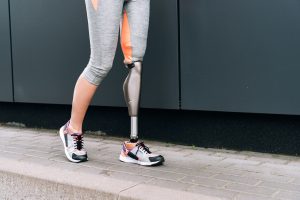
Can I Make A Claim For Leg Injury Compensation?
If you suffered a leg injury due to a breached duty of care, you can likely claim compensation. A duty of care is a legal obligation an individual or organisation has towards the reasonable safety of others.
Road users, employers, occupiers of public spaces, and medical professionals all owe you a duty of care in various situations, which you can read more about in the following section.
Unsure if your injury was caused by a breached duty of care? Our advisors can help.

Accidents That Could Result In A Leg Injury Being Sustained
There are several ways that a leg injury could occur. We’ve covered the main ones below.
Road Traffic Accidents
All road users must use the road in a safe manner to avoid harm to others. This is the duty of care that we owe to each other when using the nation’s roads. To ensure adherence to this duty, road users need to comply with the Road Traffic Act 1988 and Highway Code. The incidents below are due to a breached duty of care.
- A driver runs through a red light and crashes into your car, causing you to sustain a leg injury that is so severe it requires below-knee amputation.
- A driver goes over the speed limit, swerving into your vehicle and leaving you with whiplash and a torn ligament in your knee.
Workplace Accidents
Under the Health and Safety at Work etc. Act 1974, all employers owe a duty of care to employees to take reasonably practicable steps to ensure workforce safety. Below are some examples of what would be considered a breached duty of care leading to an accident at work.
- Your employer asks you to operate a machine without offering the appropriate training. You suffer a severe soft tissue injury when attempting to use the machine.
- You are asked by your employer to handle equipment that has not been risk assessed, causing you to drop it when it’s too heavy and shatter your knee.
Public Place Accidents
Under the Occupiers’ Liability Act 1957, all occupiers of a space owe a duty of care to any visitors to that space. Some examples of how occupier negligence can lead to a leg injury can be found below.
- You are at a restaurant where the floor has recently been mopped, but no signage has been put up to signify this. You slip and break your ankle on the wet floor.
- You are walking along a slab of loose pavement that the council has known about for months but has not fixed. You trip and tear a tendon in your thigh and knee.
Medical Negligence
All medical professionals owe patients a duty of care, meaning they must provide care to the expected standard. If you suffer avoidable or unnecessary harm because of a breached duty of care, like in the situations below, you can likely claim.
- You undergo an operation for your knee that does not go to plan due to surgical negligence, leaving your leg completely paralysed.
- Your symptoms of leg pain are ignored for years, meaning you have to undergo extensive treatment for your leg that still leaves it weaker than before and stops you from doing certain tasks.
Assault Or Criminal Injury
You may be able to receive compensation for a leg injury due to an assault through the Criminal Injuries Compensation Authority (CICA). However, requirements to claim through the CICA are different to making a personal injury or medical negligence claim. Some examples of a leg injury because of assault are.
- You are attacked by a man under the influence of drugs, leading to a broken leg and severe psychological trauma in the form of anxiety and post-traumatic stress disorder.
- You are stabbed in the leg causing extensive injuries.
Questions regarding anything in this section? Get in contact.
What Leg Injuries Could Compensation Cover?
There are numerous leg injuries that could be covered by compensation, but we’ve covered some of the main ones in this section.
- Soft tissue injuries occur when the muscles, tendons, and ligaments in your leg become damaged.
- Leg paralysis injuries can be temporary or permanent and can affect any area of the leg or legs.
- Leg amputation injuries can be partial or full amputations, either above or below the knee.
- Knee injuries include sprains as well as more serious leg injuries like the tearing of ligaments or cartilage.
- Ankle injuries include sprains, fractures, and breaks.
- Foot injuries – as above, with the inclusion of toes.
If you’re unsure whether your leg injury is covered by compensation, ask an advisor, who can tell you whether you’re eligible to claim.

How Can I Make A Leg Injury Compensation Claim?
You will need to claim within the 3-year time limit and have the correct evidence to pursue a leg injury claim.
Time Limits
Under the Limitation Act 1980, there is a 3 year time limit to claim compensation. This begins on the date of the accident in the majority of cases and applies to both medical negligence and personal injury claims. For medical negligence claims, the time limit begins from the date negligence occurred or from the date you became aware that negligence occurred. Whereas, for personal injury, it begins on the date of the accident that caused your leg injury.
However, certain types of injured parties cannot handle a claim themselves. This gives them an exception to the time limit.
The exceptions to this limit are:
- If the claimant is under 18. Minors cannot claim, though they can be represented by a litigation friend. No time limit applies until the claimant turns 18, from when they have 3 years to claim.
- If the claimant does not have the mental capacity to claim. No time limit applies in this situation unless capacity is regained. Should this occur, then they will have 3 years from that date to file a claim.
In either case, a litigation friend could be appointed to handle the claim for them. Some of the duties involve communicating with the injured party’s solicitor and ensuring that their wishes are considered and respected throughout the process.
If you are claiming through CICA, you have 2 years to do so. However, some exceptions apply.
Evidence
The more evidence you have, the better. We recommend collecting the types listed below.
- Medical records.
- Photos and videos of your injuries and where the accident happened.
- A way to contact any witnesses to the accident or your treatment (for medical negligence cases).
- A log of the accident book for accidents in a public place or accidents at work.
- The insurance details of all road users involved (for road traffic accidents).
If you want to know more about evidence or time limits, contact our advisors.
The Benefits Of Claiming For Leg Injuries With A No Win No Fee Solicitor
Personal injury cases and medical negligence claims can be extremely difficult to navigate by yourself, particularly in cases where the defendant refuses to admit liability. A solicitor will communicate with all parties for you, removing some of the stress.
Moreover, you can claim with our panel via a Conditional Fee Agreement, a type of No Win No Fee agreement. Claiming this way means:
- You only pay solicitor’s fees (capped at 25%) when you receive injury compensation (this is a success fee).
- You do not pay these fees if your claim is unsuccessful.
- You also won’t be asked to pay your solicitor a fee for their work when the claim commences or moves through the stages.
Our advisors can give you more information about No Win No Fee agreements.
How Public Interest Lawyers Can Help
As mentioned, choosing to work with a solicitor means you may have a higher chance of receiving compensation. Our panel will also communicate with you throughout the claims process, meaning you don’t have to constantly check for updates. Claiming with professionals like the panel at Public Interest Lawyers makes deciding to seeking leg injury compensation less of a burden.
Our panel of personal injury solicitors can assist with many aspects of the leg injury claims process, including:
- Explaining legal terms and acts.
- Helping to apply for interim payments.
- Setting up a taxi account.
- Negotiating a compensation settlement.
- Assisting with court proceedings.
If you want to find out more about our panel and what they can help with, get in touch with our advisors today. It’s 100% free to contact us using the methods below, and we’ll never waste your time.
- Speak to an advisor via 0800 073 8803.
- Complete our contact form.
- Talk to somebody now using the live chat.
Frequently Asked Questions
If you’re short of time, we’ve created a quick Q&A for you to browse below.
Can I Claim If I Was Responsible For My Leg Injury?
You can still claim if you are partially responsible for your leg injury. Being partially responsible falls under two categories: split liability and contributory negligence.
Split liability is when you contribute to your accident, whereas contributory negligence is when you contribute to your injuries – i.e., by not wearing your seatbelt when involved in a road traffic accident. Your compensation will be reduced by the percentage for which responsibility was yours.
Can I Make A Claim On Behalf Of A Loved One?
Yes, you can represent a loved one throughout a claim by becoming a litigation friend, meaning you will communicate on their behalf.
What If I Was Injured On Private Property?
You can claim for an injury on private property if the property occupier is found to be responsible for your injury.
Could Compensation Cover The Psychological Impacts Of A Leg Injury?
You can claim for psychological trauma as well as for physical pain and suffering when claiming leg injury compensation. This includes conditions like anxiety, depression, and post-traumatic stress disorder.
My Leg Injury Is Only Minor, Can I Still Claim?
Yes. Whether you have minor injuries or serious injuries, it’s possible to make a leg injury compensation claim.
What If I Injured My Leg Abroad?
You can pursue a leg injury claim if the injury happened abroad, as long as you can prove that your tour operator breached their duty of care. For example, if your hotel was part of the package holiday and you fell down the stairs due to a faulty railing.
How Long Will It Take For My Leg Injury Compensation To Be Paid?
The leg injury claims process can take anywhere from a few months to years, but you should receive your compensation within a month once your settlement is agreed.

Learn More
Discover more of our guides below.
- Read our medical negligence claim FAQs.
- Read our public liability claim FAQs.
- Read our accident at work claim FAQs.
- Fractured femur compensation case study guide
These links contain extra information relevant to this guide.
- Find out if you’re entitled to Statutory Sick Pay (SSP) via GOV.UK.
- Read about symptoms of a broken leg via NHS.UK.
- See the professional duty of candour for medical professionals via the General Medical Council (GMC-UK.ORG).
We hope you found the information in our leg injury compensation guide beneficial. For any further questions, don’t hesitate to reach out.